
So wählen Sie einen Mini-Bagger aus
So wählen Sie einen Mini-Bagger aus
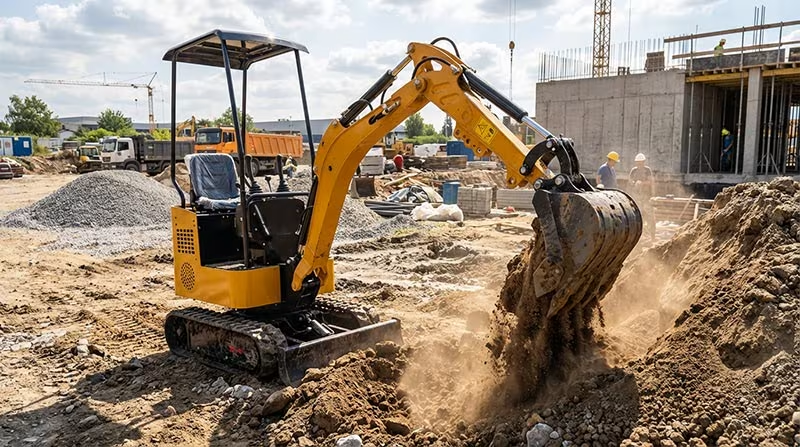
Selecting the right mini excavator is a critical investment decision for construction companies, agricultural contractors, and municipal engineering teams. The performance of a machine directly affects project efficiency, fuel consumption, maintenance cost, and overall profitability.
With increasing demand for compact construction equipment, the market offers a wide range of models with different specifications. Understanding how to evaluate these parameters is essential for making a cost-effective and long-term purchase decision.
1. Application Scenario Analysis (Most Important Step)
Before selecting a mini excavator, clearly define its working environment and application type.
Bauprojekte
- Foundation digging
- Roadside engineering
- Urban infrastructure work
Requires: stronger hydraulic force + compact turning radius
Agricultural Use
- Farmland trenching
- Irrigation system installation
- Land leveling
Requires: stable operation + fuel efficiency
Kommunaltechnik
- Pipeline installation
- Maintenance work
- Small demolition tasks
Requires: multi-function capability + attachment compatibility
Matching machine type with application is the first step to avoiding over-investment or under-performance.
2. Engine System Performance
The engine determines the core power output of the excavator.
Key evaluation factors:
- Rated horsepower and torque
- Fuel consumption per hour
- Emission compliance standards
- Brand reliability (long-term durability)
A high-efficiency engine reduces fuel cost by up to 10–20% in long-term operation.
3. Hydraulic System Quality
The hydraulic system is the “heart” of a mini excavator.
A high-performance system should include:
- Stable hydraulic pressure distribution
- Fast response speed for operation control
- Heat resistance for continuous work
- Anti-leak sealing system
Poor hydraulic systems lead to slow digging speed, higher maintenance costs, and reduced machine lifespan.
4. Structural Design and Durability
A well-designed excavator frame improves safety and lifespan.
Important aspects include:
- Reinforced boom and arm structure
- High-strength steel chassis
- Balanced weight distribution
- Anti-vibration design
Durability is especially important for harsh environments such as mining, rocky soil, or long-hour operations.
5. Attachments Compatibility and Multi-Function Use
Modern excavators are not single-function machines. Compatibility with attachments significantly increases ROI.
Common attachments:
- Hydraulic breaker (demolition work)
- Auger (drilling holes)
- Grapple (material handling)
- Ripper (hard soil breaking)
Machines with quick-change systems reduce downtime and increase productivity.
6. Maintenance Cost and Service Support
Total ownership cost is not only purchase price but also maintenance cost.
Key factors:
- Easy access to engine components
- Availability of spare parts
- Hydraulic system repair convenience
- Global after-sales service support
A strong supplier support system can reduce downtime by 30% or more.
7. Cost vs Performance Balance
A good mini excavator is not always the cheapest or the most powerful.
Optimal selection should consider:
- Initial investment cost
- Fuel efficiency
- Maintenance frequency
- Expected working hours per year
The best choice is always “balanced performance + low lifecycle cost”.
Auf der Suche nach einem
Zuverlässiger Maschinenpartner?
Kontaktieren Sie uns noch heute für Produktdetails, Angebote und Kooperationsmöglichkeiten.
Holen Sie sich jetzt ein Angebot